
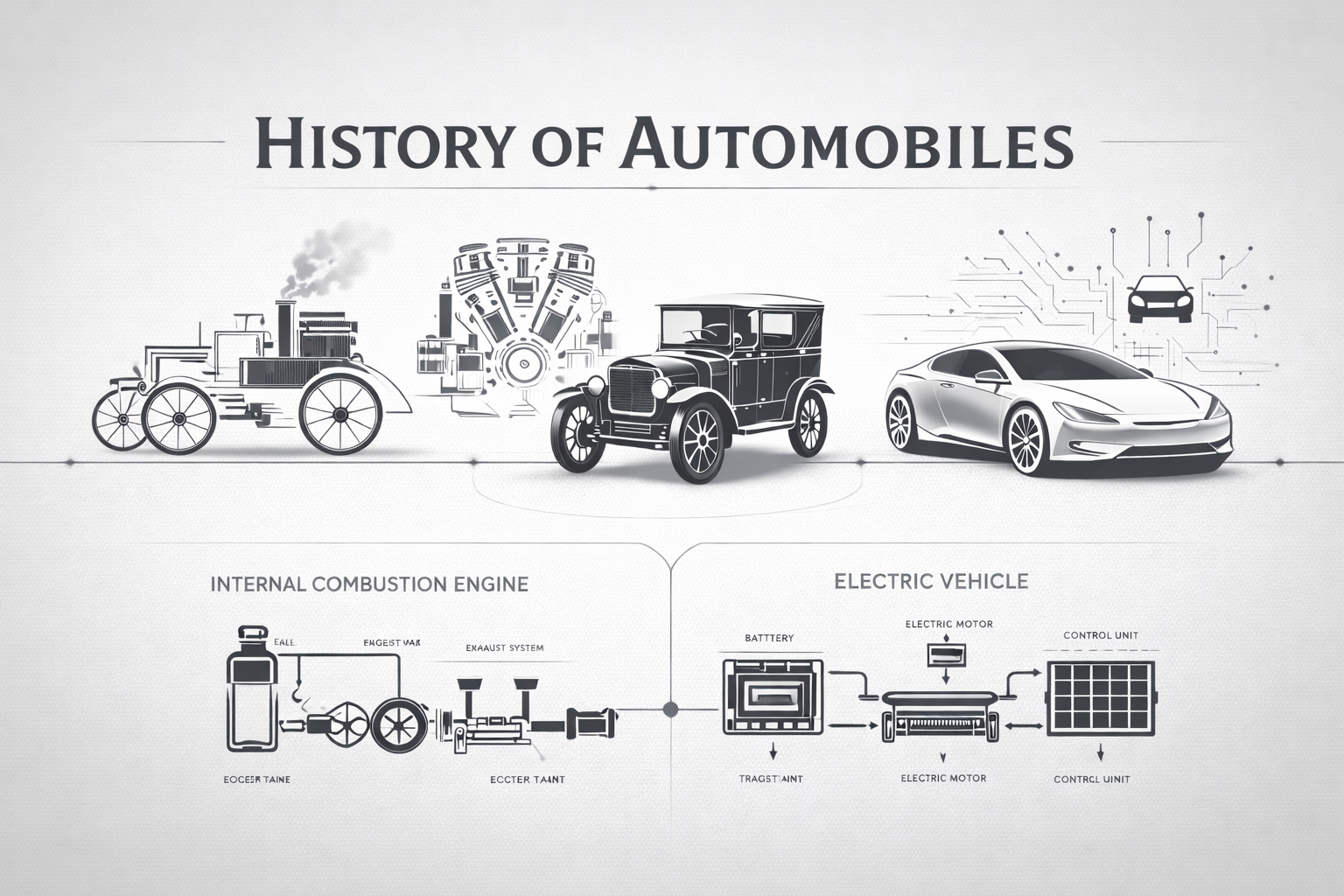
A clear crisp engineer’s guide to automotive history, breaking down how innovation, design, and technology evolved to shape the cars we drive today.
History of Automobiles: From Steam Engines to Smart Cars
History of Automobiles
I come from an automotive engineering background, and one thing I’ve learned early is this:
you can’t truly understand modern cars unless you understand why older ones were built the way they were.
The history of automobiles isn’t just a timeline of inventions. It’s a long chain of engineering decisions — some brilliant, some flawed — all driven by real-world constraints like materials, efficiency, safety, and cost. Every modern vehicle, whether electric or petrol-powered, carries design DNA from the past.
This article isn’t written like a textbook. It’s written the way engineers talk — focusing on what problem existed, and how it was solved.
Early History of Automobiles: When Engineering Came First (1760s–1800s)
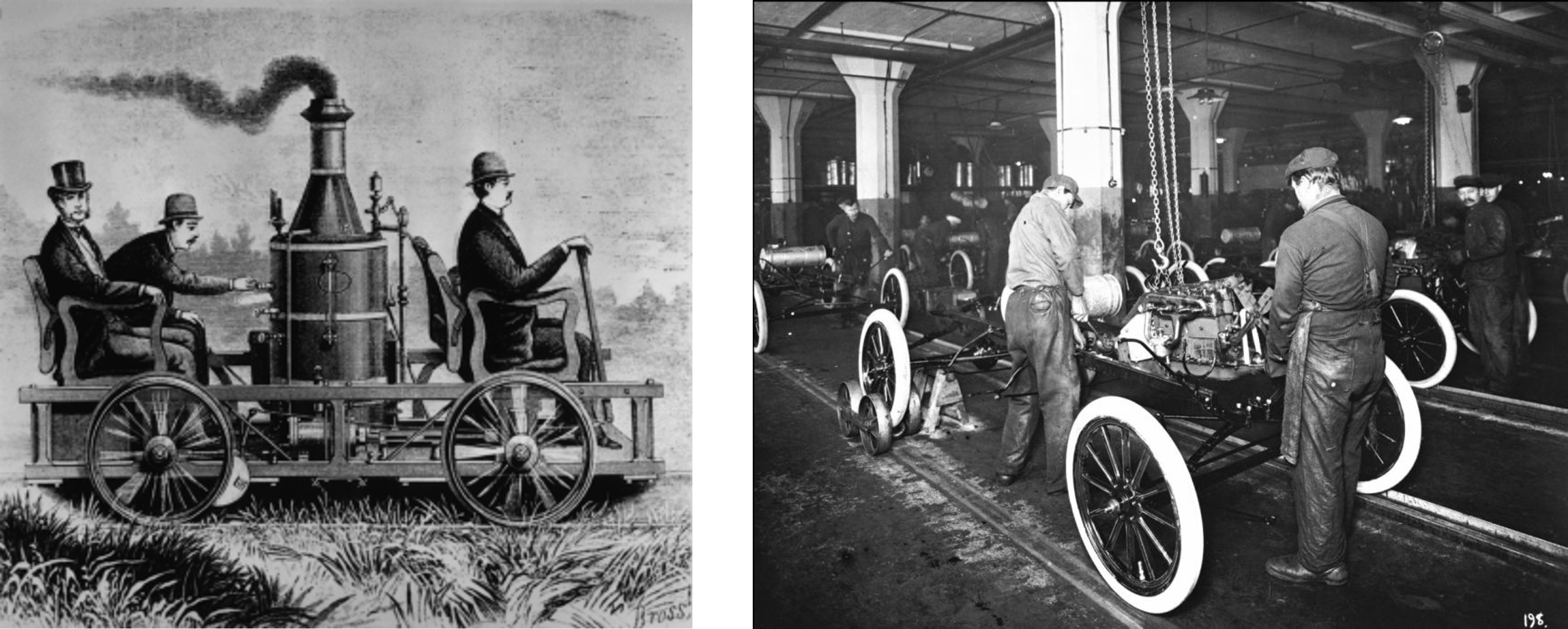
The earliest automobiles were steam-powered, and from a pure engineering perspective, they were impressive machines.
Steam engines produced excellent low-end torque, which sounds great on paper. But they came with serious limitations:
-
- Massive weight
-
- Long warm-up times
-
- Poor efficiency
-
- Difficult thermal control
🔧 Engineer Callout: Why Steam Failed
Steam engines required large boilers and water storage, making vehicle packaging inefficient. The power-to-weight ratio was simply not practical for personal transportation.
Despite these drawbacks, steam vehicles proved a critical point — self-propelled transport was achievable. That single idea pushed engineers to search for better solutions.
The breakthrough came with the internal combustion engine in the late 19th century. Smaller size, quicker response, and better energy density made it ideal for vehicle integration. This wasn’t just a new engine — it was a new way to design automobiles.
Mass Production: Engineering Meets Manufacturing Reality (1900–1930)
This phase of the history of automobiles is often discussed from a business angle, but from an engineering standpoint, it was revolutionary.
Before mass production, cars were built almost like prototypes. Once assembly lines were introduced:
-
- Parts had to be interchangeable
-
- Tolerances had to be controlled
-
- Reliability became non-negotiable
🔧 Engineer Callout: Why Standardisation Changed Everything
Standardised components forced engineers to design for durability and repeatability. This is when serviceability and long-term reliability became core design goals.
Mass production didn’t just make cars cheaper — it made them repairable and scalable, which is why automobiles became part of everyday life.
Post-War Innovation: Balancing Performance and Safety (1940s–1980s)
After World War II, automotive engineering accelerated rapidly. Better materials, improved machining, and deeper understanding of vehicle dynamics changed how cars were designed.
This era introduced:
-
- Higher compression engines
-
- Improved suspension geometry
-
- Hydraulic braking systems
-
- Early passive safety concepts
🔧 Engineer Callout: Birth of Safety Engineering
Crumple zones and structural load paths were introduced to manage crash energy — a huge shift from rigid body designs that transferred impact directly to occupants.
Cars stopped being just transportation machines. They became systems engineered to protect human life.
Electronics Enter the Picture (1990s–2000s)
This was a turning point I personally find fascinating. Vehicles shifted from mechanical systems to electro-mechanical and electronic control systems.
Engine Control Units (ECUs) allowed engineers to:
-
- Precisely control fuel injection
-
- Optimize ignition timing
-
- Reduce emissions
-
- Improve fuel efficiency
🔧 Engineer Callout: Why Software Matters
Once sensors and ECUs entered vehicles, engineers could control variables in milliseconds — something mechanical systems could never achieve.
Safety systems like ABS and airbags turned vehicles into responsive, intelligent machines. From this point onward, software became as important as hardware.
Modern Automobiles: Software-Driven Machines (2010–Present)
Modern cars are best described as integrated engineering platforms. Mechanical simplicity has increased, but system complexity has exploded.
Today’s vehicles feature:
-
- Electric and hybrid powertrains
-
- High-voltage battery management systems
-
- Advanced Driver Assistance Systems (ADAS)
-
- Continuous software updates
🔧 Engineer Callout: EVs Changed the Rules
Electric vehicles reduce mechanical complexity but demand extreme precision in thermal management, software control, and functional safety.
From an engineering perspective, we’ve moved from designing engines to designing ecosystems.
Why the History of Automobiles Still Matters
Many problems engineers face today — heat management, efficiency, reliability — existed 100 years ago. The tools have changed, but the challenges remain familiar.
Understanding the history of automobiles helps engineers:
-
- Avoid repeating old mistakes
-
- Appreciate proven design philosophies
-
- Build better future systems
Innovation rarely starts from zero. It evolves.
Conclusion
The history of automobiles is a story of experimentation, failure, and refinement. From steam engines to smart cars, every generation reflects the engineering knowledge of its time.
As the industry moves toward electrification and autonomy, understanding this journey becomes essential. At AutoTech Today, we don’t just talk about cars — we explain why they are the way they are.
Explore. Explain. Engineer.