
Advanced Driver Assistance Systems (ADAS): A Practical Engineering Foundation
AutoTech Today — automotive engineering explained
Each article in this series explores one layer of ADAS in detail, while this page serves as the central technical foundation.
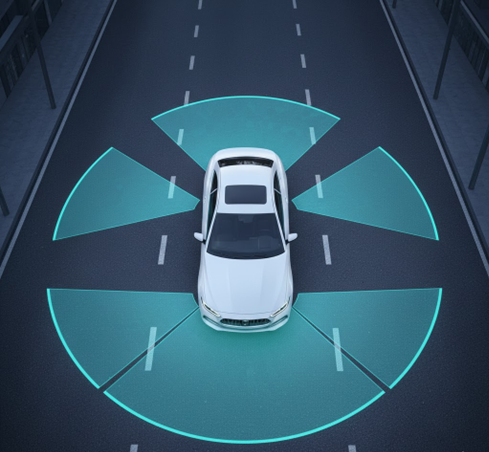
Advanced Driver Assistance Systems, commonly referred to as ADAS, are now a standard part of modern vehicles. They work quietly in the background, monitoring traffic, tracking lane position, and measuring distances long before a driver becomes consciously aware of potential risk.
Unlike engines or braking systems, ADAS does not feel mechanical. Most of the time, drivers only notice it when something changes — a warning sound, a steering nudge, or a brief braking intervention. These moments are subtle, but they reflect a deeper shift in how vehicle safety is designed.
This page is the central ADAS hub on AutoTechToday. It explains what ADAS is, why it exists, and how to explore each part of the technology in depth through focused articles.
Important: ADAS is not self-driving. It is a driver assistance layer designed to support, not replace, human control. ADAS learning path Why ADAS exists What ADAS is — and is not How ADAS works (high level) Explore ADAS in depthWhy ADAS Exists in Modern Vehicles
Modern vehicles are mechanically reliable. Brake systems are redundant, steering is electronically monitored, and powertrain failures are relatively rare. Yet road accidents continue to occur at scale.
The primary reason is not mechanical failure, but human limitation. Driving requires continuous perception, prediction, and reaction. Fatigue, distraction, glare, and information overload affect every driver — including experienced ones.
According to global road safety data from the World Health Organization, human factors are a major contributor to road traffic injuries worldwide. ADAS exists to reduce risk during moments when human attention naturally fluctuates.
ADAS does not eliminate mistakes. Its role is to reduce the chance that small lapses turn into serious consequences.
What ADAS Is — and What It Is Not
ADAS is often confused with autonomous driving, but the distinction is critical. ADAS assists physical actions such as braking, steering, and speed control. It does not make strategic driving decisions.
Responsibility always remains with the driver. This boundary is defined by the SAE Levels of Driving Automation, where ADAS corresponds to Levels 0 through 2.
ADAS is designed to react earlier — not to decide independently.How ADAS Works (High-Level View)
Although individual features vary, all ADAS systems follow the same internal structure:
- Sensing — cameras and radar observe the environment
- Processing — software evaluates risk and predicts motion
- Actuation — warnings or limited assistance are applied
This separation allows ADAS to degrade safely. When sensor confidence drops, intervention is reduced rather than continued blindly.
Explore ADAS in Depth
ADAS becomes much clearer when broken into focused topics. The articles below form a structured learning path, from philosophy to sensors, logic, intervention, and real-world limits.
1. Why Driver Assistance Exists — and Why It Stops Short of AutomationExplains why ADAS supports the driver instead of replacing them, and why this boundary is critical for safety.
2. How ADAS Sees the Road: Sensors, Visibility, and Trade-OffsBreaks down cameras, radar, and sensor fusion, including why no system can see perfectly in all conditions.
3. How ADAS Thinks: Decision Logic, Prediction, and Risk ThresholdsExplains how ADAS decides when to warn or intervene, and why it is intentionally conservative.
4. ADAS Warnings, Braking, and Steering: How Intervention Really WorksCovers how alerts escalate, why braking feels limited, and how steering assistance supports driver intent.
5. ADAS Limits, Failures, and Driver Responsibility in Real TrafficShows where ADAS stops working, why disengagement happens, and how drivers should use it safely.
ADAS, Safety Ratings, and Regulation
Independent safety organizations influence how ADAS systems are designed and tuned. Programs such as Euro NCAP Safety Assist evaluate not just feature presence, but how predictably and responsibly systems behave.
Guidelines from authorities like the U.S. National Highway Traffic Safety Administration reinforce the principle that ADAS must support — not replace — the driver.
Related AutoTechToday articlesAutomatic Emergency Braking Explained
Lane Keeping Assist Explained
Adaptive Cruise Control Explained